
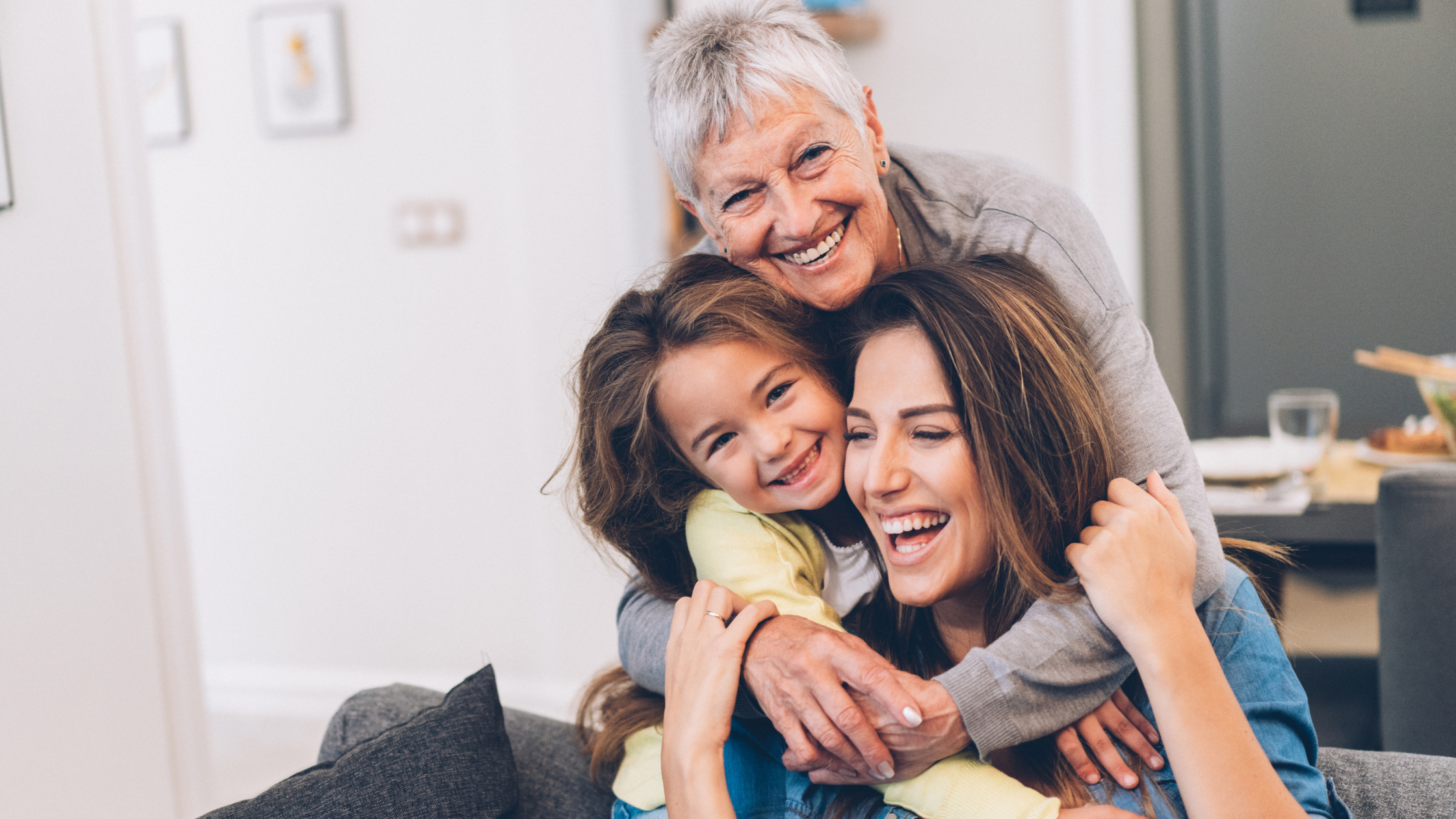
Mother’s Day is often filled with flowers, cards and time spent celebrating the women who raised us. For many, it is a joyful day. For others, it can be more complex.
Across the child welfare system and in communities everywhere, motherhood does not always follow one path. There are biological mothers, foster moms, kinship caregivers, adoptive moms, stepmoms, grandmothers and other caregivers who step into a mothering role when children need it most.
At TFI, we see every day that being a “mom” is not defined by one title alone. It is defined by presence, consistency and the willingness to show up for a child.
Rethinking what it means to be a mom
Motherhood is often portrayed in one specific way, but the reality is much broader. In the United States, more than 390,000 children are in foster care at any given time, and many rely on foster parents, kinship caregivers and adoptive families for daily care and stability.
At the same time, millions of grandparents and relatives are raising children outside of traditional parenting roles. These caregivers may not always be the ones traditionally recognized on Mother’s Day, but their impact is just as meaningful.
Being a mom can look like:
- Providing a safe and stable home
- Showing patience through difficult moments
- Supporting a child through transitions and uncertainty
- Advocating for a child’s needs in school, health care or daily life
- Creating a sense of belonging, even when circumstances are temporary
Motherhood is less about how a family is formed and more about how a child is cared for.
Biological moms: A lifelong connection
For many children, biological mothers remain an important part of their story, even when they are not living together full-time.
In foster care and family preservation settings, reunification is often the goal. This means supporting biological parents as they work toward stability, healing and the ability to safely care for their children again.
Mother’s Day can be a meaningful time to recognize:
- The effort many biological moms are making to rebuild and reconnect
- The importance of maintaining healthy connections when possible
- The role of support systems in helping families stay together
Motherhood does not stop in difficult seasons. With the right support, many families are able to move forward together.
Foster moms: Showing up in the in-between
Foster parents play a critical role in the child welfare system, often stepping in during times of uncertainty.
Foster moms provide:
- Daily routines and structure
- Emotional support during transitions
- A safe environment where children can begin to heal
Children in foster care may stay for a short time or longer periods, but the care they receive during that time matters. Research shows that stable, supportive relationships with caregivers can significantly improve outcomes for children who have experienced trauma.
Foster moms often step into the “in-between,” offering care without always knowing how long a child will stay. That kind of commitment requires patience, flexibility and compassion.
Kinship caregivers: Family stepping in
Kinship care, where relatives or close family friends care for children, is one of the most common forms of out-of-home care.
In fact, more than one-third of children in foster care are placed with relatives. Outside of the formal system, millions of children are being raised by grandparents, aunts, uncles or family friends. These caregivers often take on parenting responsibilities quickly, sometimes with little preparation. Even so, they provide something incredibly important: familiarity and connection.
Kinship caregivers help children:
- Stay connected to family and culture
- Maintain relationships that feel known and safe
- Experience less disruption during a difficult time
On Mother’s Day, many of these caregivers are quietly doing the work of parenting without always being recognized for it.
Adoptive moms: Building families in new ways
Adoption creates permanent families through a different path. Adoptive moms provide long-term stability and a sense of belonging for children who may have experienced loss or multiple transitions. They often help children navigate complex feelings about identity, history and connection.
Adoptive families show that:
- Family is not defined by biology alone
- Love can grow through intentional commitment
- Stability and consistency can help children thrive over time
For many adoptive moms, Mother’s Day holds both joy and reflection, recognizing the journey that brought their family together.
When Mother’s Day feels complicated
Not every child or caregiver experiences Mother’s Day the same way. For children in foster care, adoption or kinship care, the day can bring up mixed emotions. They may be thinking about multiple caregivers, past experiences or changes in family structure.
Caregivers can help by:
- Keeping the day flexible and low-pressure
- Allowing space for different feelings
- Acknowledging all important relationships in a child’s life
- Focusing on connection rather than expectations
A simple, supportive approach can help children feel safe, even when emotions are complex.
Honoring all forms of care
Mother’s Day is an opportunity to broaden the way we think about care and connection.
You might:
- Encourage a foster parent or kinship caregiver
- Recognize a biological mom working toward reunification
- Thank an adoptive mom for the stability she provides
- Support organizations that serve children and families in your community
- Learn more about becoming a foster parent or supporting foster care programs
Small actions can make a meaningful difference for families navigating different paths.
At the heart of it all
At its core, motherhood is about showing up. It is found in early mornings and late nights, in routines and in moments of uncertainty. It is in the steady presence of someone who chooses, again and again, to care for a child.
This Mother’s Day, we honor not just one kind of mom, but all the ways care, commitment and compassion shape the lives of children. Because when children have people who show up for them, in any form, they have a stronger foundation to grow, heal and thrive.
